
Rubber Track Steel Cord Winding Line
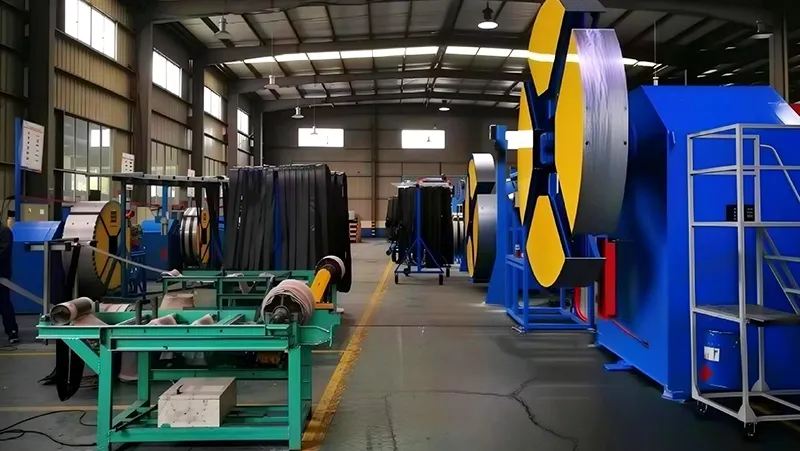
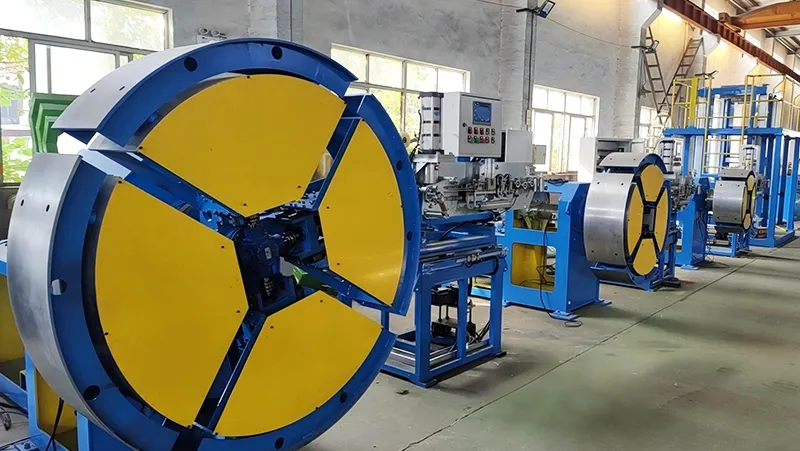
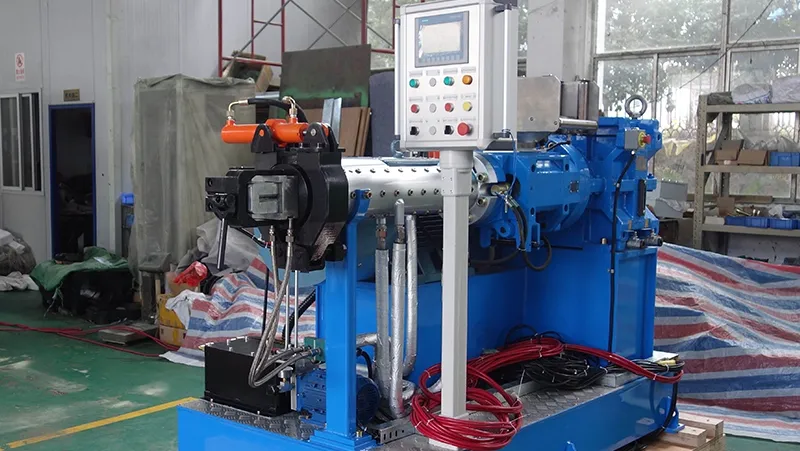
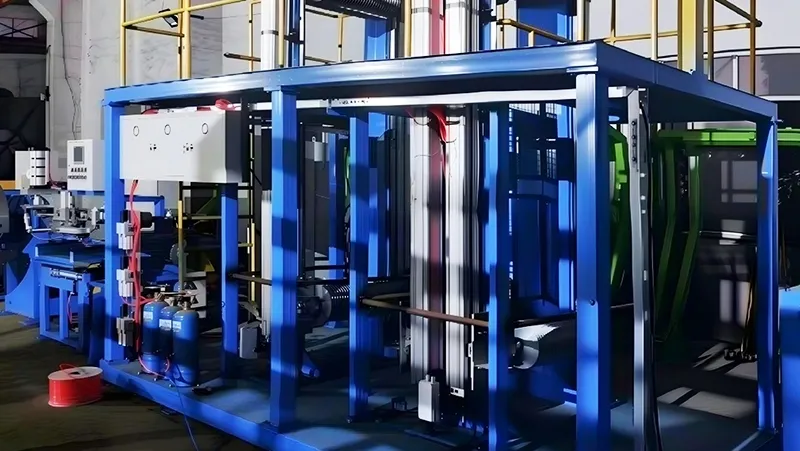
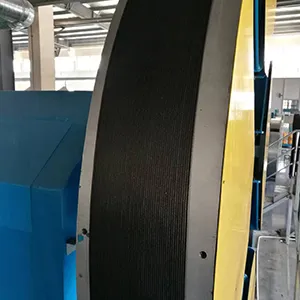
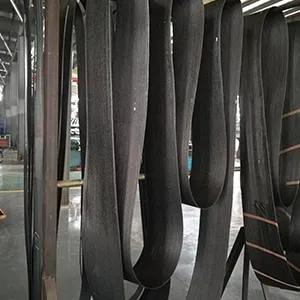
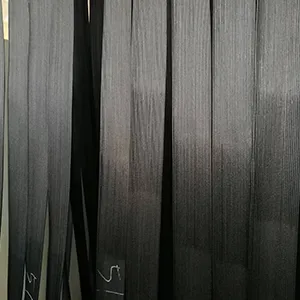
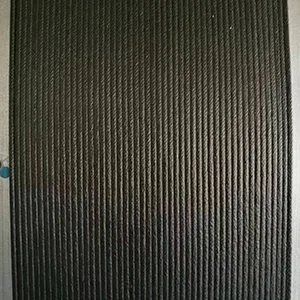
The main job of rubber track steel cord winding lines is to build the steel cord reinforcement layer inside the rubber track. A single rubber-coated steel cord is wound onto the forming drum in a tight spiral pattern, with the winding width and number of turns set through the control system. This allows different steel cord belt specifications to be formed on the same drum with more accurate cord placement and more even tension, which is important for the overall strength of the reinforcement layer and the quality of the finished rubber track.
Samples
Technical Specifications
| Applicable Steel Cord Diameter Range (mm) | Ø1.4–Ø6.4 |
| Applicable Steel Cord Belt Circumference Range (mm) | 1400–12000 |
| Max. Adjustable Winding Circumference (mm) | 700 |
| Traverse Width (mm) | 320 |
| Max. Winding Speed (m/min) | 80 |
| Max. Steel Cord Storage Length (m) | 100 |
| Max. Traction Line Speed (m/min) | 110 |
| Production Efficiency (example: L = 4950 mm, 23 turns) | 2 min per strip |
Features
- One forming drum can be used for steel cord belts in different specifications.
- Rubber coating, conveying, tension control, winding, and cord arrangement are managed through the control system for more accurate winding.
- Rubber-coated steel cord is used in place of the earlier dipping process, reducing gasoline use and improving production safety and efficiency.
- A tension control system helps keep the force on each turn more even, which supports the overall strength of the steel cord layer and the quality of the finished rubber track.